
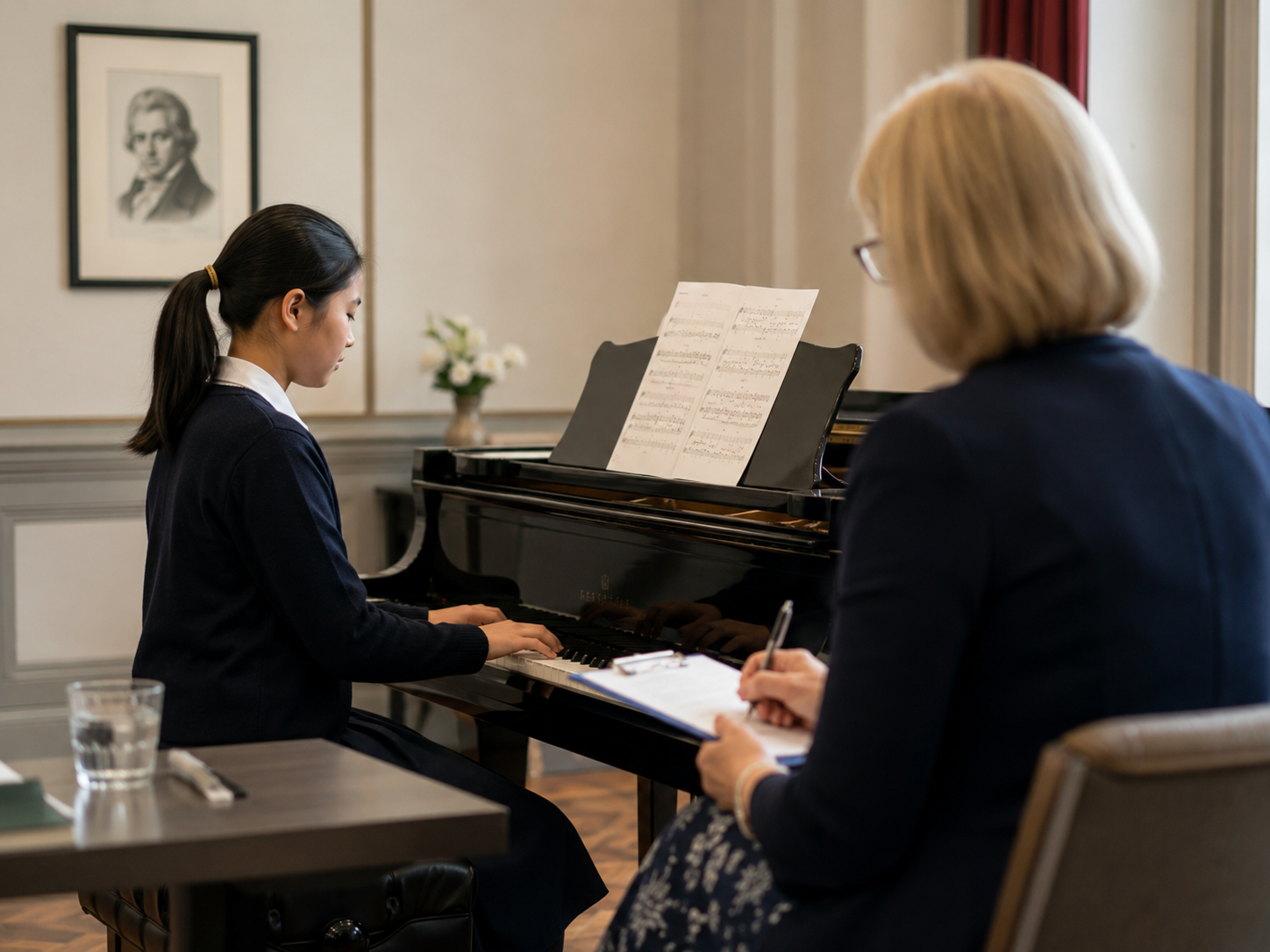
Piano, Cello and Theory Exams
I prepare piano, cello and music theory students for graded music exams, including ABRSM and Trinity assessments.
Exam preparation is carefully paced so that students are entered only when they are ready and confident.
ABRSM & Trinity Practical Exams
For piano and cello students, practical exam preparation includes support with pieces, scales and arpeggios, sight-reading, aural skills and performance technique.
Lessons focus on building secure playing, musical expression and confidence, while helping students understand the different requirements of the exam. Students are guided through each stage of preparation with clear practice goals between lessons.
Music Theory Exam Preparation
I also prepare students for ABRSM music theory exams, including Grade 5 theory.
Theory lessons cover key signatures, time signatures, scales, intervals, chords, cadences, transposition, musical terms, score reading and exam-style questions. Lessons are structured step by step so students can build accuracy and confidence before taking the exam.
Preparation may include written exercises, past-paper style questions, printed practice papers, online practice resources and mock exams. For students taking online theory exams, I can also help them become familiar with the style and format of online questions.
Online music theory lessons are also available.
ABRSM Exam Dates
ABRSM Practical Face-to-face Instrumental Exam 2026
October Session (3a) London Wall Place
Booking period: 01 September 2026 - 07 September 2026
Exam dates: 05 October 2026 - 24 October 2026
Autumn Session (3)
Booking period: 24 September 2026 - 07 October 2026
Exam dates: 04 November 2026 - 05 December 2026
Practical Music Exam Tips
Confirm Exam Details: Review the appointment email from ABRSM or Trinity board for your exam time, location, and any special instructions.
Arrive Early: Get to the waiting room at least 10 minutes before your scheduled exam to settle in and prepare.
Warm-Up and Tune: Use a warm-up room if available to play through a few scales and key sections of your pieces. For cellists, tune your instrument using a tuner or piano if available.
Manage Nerves: Feeling nervous is normal. Take a deep breath and smile as you enter the exam room to help you relax.
Adjust Setup: Make sure your bench, stool, or music stand is set to the right height. Don’t hesitate to adjust it or ask for help.
Start with a Warm-Up: It’s fine to ask the examiner if you can begin with a brief warm-up, like a scale or a few bars of a piece.
Keep Going: If you make a mistake, keep playing. Mistakes are usually less noticeable than they seem.
Pauses Are Fine: Don’t rush between pieces. The examiner will be writing notes and will tell you when to start your next piece.
Expect Interruptions: The examiner may stop you during a piece once they’ve heard enough to make an assessment.
Remember, They’re on Your Side: The examiner is rooting for you and looking forward to your performance!